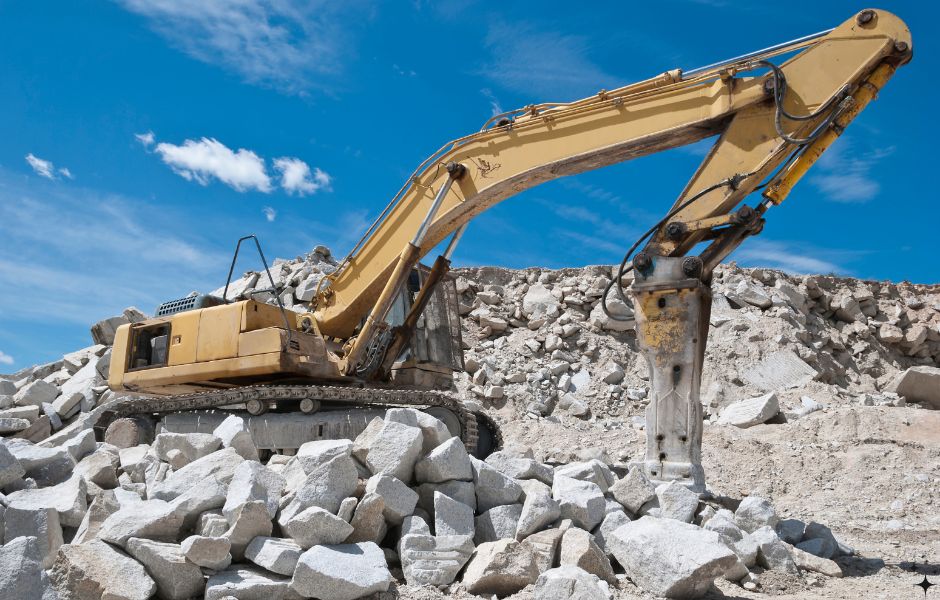
Quarrying is a large-scale industrial process used to extract rock, gravel, sand, and other minerals for use in construction and landscaping.
Tracing back to ancient times, quarrying was initially used to source materials to build structures, such as roads and buildings. Since then, quarrying has evolved into a commonly used method for sourcing many essential materials and producing quarried aggregates.
Aggregates are the backbone of construction and play an essential role in almost every structure you see around you. As many aggregates are naturally occurring materials, they need to be effectively extracted before being used in construction and landscaping projects.
Quarried aggregates undergo a long journey from their natural state to become essential components of construction projects. Quarrying aggregates improves the quality and durability of these key components while minimising waste and environmental impact.
In this article, we’ll explore the different steps of producing quarried aggregates and how quarrying transforms raw materials into construction aggregates.
Step 1 – Locating the Material
The first step of producing quarried aggregates is identifying the right locations with the best materials and a large supply of the desired raw material.
Geologists often survey areas to confirm the quality and quantity of raw materials, such as sand or carrstone. The data from these surveys is used to ensure the volume and grade of aggregates will justify the large investment required to quarry a site.
After identifying the location of the material, the site must be made accessible to minimise transportation costs.
Step 2 – Accessing the Raw Material
Once the site is chosen and the necessary extraction permits are secured, the land is cleared and the site is prepared for extraction of the raw materials.
To easily access the raw material, remove the overburden (unwanted top layers) with the help of heavy machinery, such as bulldozers and diggers.
Eliminating this surface layer helps avoid the contamination of aggregates that are needed in construction. By removing the overburden, you ensure that the raw material below is clean and ready for extraction.
Step 3 – Extracting the Raw Material
Extraction is the removal of the actual materials used to produce quarried aggregates. Depending on the hardness of the quarried materials, various tools or controlled explosives are utilised for the removal process.
These methods break up large sections of rock, while diggers or hydraulic drills extract it. This step is essential as it helps determine the size and consistency of the quarried materials and influences the quality of aggregates.
The goal of extraction is to break raw materials into more manageable sizes for easy transportation. For this reason, it may involve multiple stages of blasting and cutting, followed by collection with diggers and dump trucks.
During this stage, keeping safety in mind is key. It’s essential that all processes are carried out following relevant safety protocols and regulations.
Step 4 – Transporting the Raw Material
After extraction, the quarried materials are transferred to the processing site, typically located near the quarry. The weight and size of your materials are key factors when choosing the mode of transport, as they can affect the type of vehicle and route needed.
Keeping transportation as efficient as possible will avoid unnecessary costs and delays. The shorter the distance, the quicker and more affordable the delivery of aggregates.
Keeping the tracks on-site even and well-maintained reduces the wear and tear on equipment and ensures the quarried materials arrive in good condition. This helps produce high-quality quarried aggregates.
Step 5 – Aggregate Processing
At the processing site, the excavated raw materials will undergo multiple stages of processing to produce usable quarried aggregates.
Through crushing, the quarried materials are broken up into smaller pieces. They’re then sorted by screeners into different sizes and types for various applications. Depending on the project requirements, the materials may even go through washing to meet construction standards.
Aggregate processing ensures a large choice of materials available, so there is always the correct size and quality of aggregates for any project.
To Wrap Up
Quarrying is a large-scale industrial process that helps produce aggregates for various construction purposes.
As you’ve just observed, through quarrying, we locate, extract, transport, process, and prepare raw materials into quarried aggregates for various construction and landscaping purposes. By constantly improving quarrying techniques, we also improve sustainability and efficiency and reduce the environmental footprint of aggregate production.
Quarried aggregates are a vital part of the UK economy. They account for 85% of the non-energy minerals extracted in the UK, and the construction industry heavily relies on them to improve the country’s infrastructure. The availability of quarried aggregates ensures that essential projects, such as roads and residential developments, can be completed to high standards.
When you next see a building or a road, remember that quarried aggregates are the essential materials used to construct these important structures and the foundation of progress and development.