As the Aussie summer sun beats down, keeping your home comfy without racking up a sky-high energy bill can feel like a real battle.
Cranking the air con on full blast is one way to cope, but it’s not great for your wallet or the planet. The good news is that a truly cool home comes from a smarter approach, blending clever design, simple habits, and modern tech to work with the climate, not against it.
Understanding Your Home’s Thermal Envelope
Before you even think about turning on a fan, it helps to understand your home’s “thermal envelope.”
This is just a fancy way of saying the barrier between the inside of your house and the great outdoors; basically, your roof, walls, windows, doors, and floors. A well-sealed thermal envelope is your first line of defence against the heat. If it has gaps, cracks, or poor insulation, it’s like trying to keep a drink cold in a cup full of holes.
Start by doing a quick check. On a windy day, feel for draughts around window and door frames. Sealing these gaps with weather stripping is a cheap and easy fix. Your ceiling is another big culprit for heat getting in.
Good quality insulation acts like an esky lid for your house, stopping hot air radiating from your roof from getting inside. Even upgrading to thicker curtains or putting reflective film on west-facing windows can make a noticeable difference, stopping heat before it even enters.
Passive Cooling Tricks for Every Room
Once your home’s envelope is as secure as possible, you can use passive cooling to keep things comfortable. These are low-tech or no-tech methods that work with nature to keep your house cool. The main idea is to block the sun during the day and welcome cool air at night.
Work your windows: Keep curtains and blinds on sun-facing windows closed during the day, especially from mid-morning to late afternoon, to keep your home cool. As soon as the temperature drops in the evening, open them up along with windows on opposite sides of the house to create a cooling cross-breeze.
- Use fans wisely: A ceiling fan doesn’t actually lower the room’s temperature, but it creates a wind-chill effect that makes you feel cooler. Make sure it’s spinning counter-clockwise in summer to push air straight down.
- Reduce indoor heat sources: Appliances like ovens, clothes dryers, and even computers generate a lot of heat. Try to limit using them during the hottest part of the day. Firing up the barbie for dinner instead of the stove is a classic Aussie solution for a reason!
These strategies are based on well-known passive cooling techniques that focus on ventilation, shading, and smart building design to cut down on the need for mechanical cooling.
Choosing the Right Cooling System
Sometimes, passive methods aren’t quite enough to beat a real scorcher. When you need that extra boost, choosing the right mechanical system is key to staying cool without wasting energy. While portable fans are great for personal comfort, a properly installed and energy-efficient air conditioning system is often the most effective solution for cooling larger spaces or entire homes.
The secret is getting the right size and type for your needs. A unit that’s too small will struggle constantly, while one that’s too big will cycle on and off too frequently, wasting power and failing to dehumidify the air properly.
Modern inverter systems are far more efficient than older models, as they can adjust their output to match the room’s needs, using significantly less electricity. Whether you opt for a split system for a single room or a ducted system for the whole house, professional installation ensures it runs at peak efficiency.
Maximising Efficiency with Smart Tech
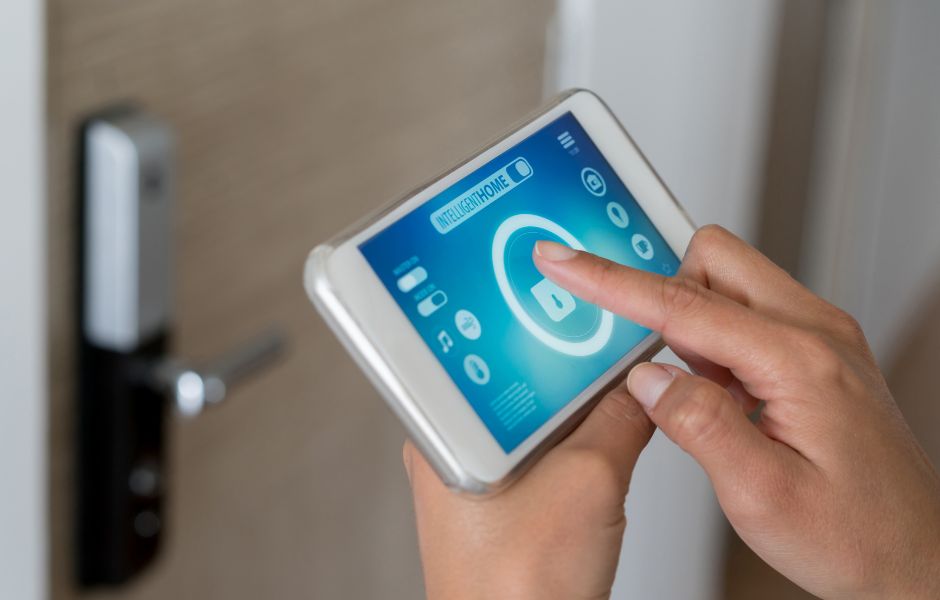
This is where you can tie all your efforts together. Smart home technology can automate your cooling strategy, making it both more effective and more efficient. A smart thermostat is the perfect starting point.
It can learn your family’s schedule and adjust the temperature automatically, so you’re not cooling an empty house. Many can even be controlled from your phone, letting you turn the air con on just before you get home.
You can also get smart with your windows. Automated blinds and curtains can be programmed to close when the sun is at its most intense and open again in the evening, all without you having to lift a finger.
Pairing these with smart sensors that detect temperature and sunlight can create a truly responsive system. Even simple smart plugs can be used to put older fans or window air conditioners on a schedule, giving you more control over your home’s climate.
Ultimately, a sustainable and cool home isn’t about one single solution. It’s about creating a layered system where your home’s structure, daily habits, and efficient technology all work together to keep you comfortable through the hottest days of the year.