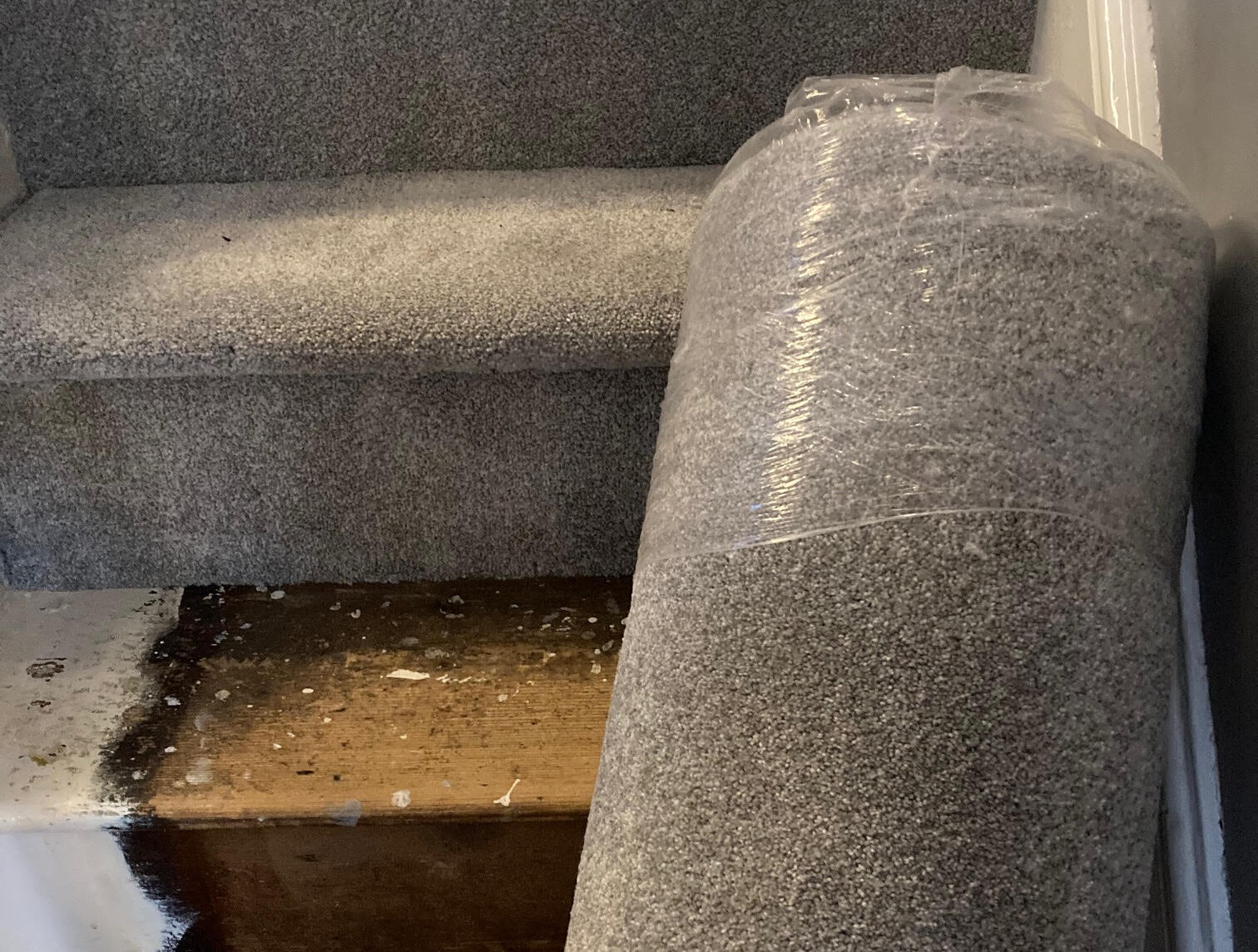
We recently fitted our own stair and landing carpet after a relative was kind enough to give us an offcut from some they had laid in their house. We’d been undecided on what to do with our hallways and stairs for quite a long time unsure whether to sand and paint them or opt for carpet.
At the beginning of this year, we finally decided it was time to carpet the stairs and upstairs landing and cover our Victorian tiles with laminate in the downstairs hallway.
Of course, 2020 had other plans and as we are both self-employed we put a hold on any unnecessary spending during the first lockdown.
When September rolled around and we were offered several meters of carpet for free we decided to go for it and save on costs further by laying it ourselves.
Unfortunately, we didn’t quite have enough carpet to cover the area needed. Luckily for us when we popped into the carpet showroom our relative had bought from they had an offcut which was more than enough to finish things.
Laying carpet yourself does of course save a lot of money. However, there is a reason people pay professionals to do it. It’s quite time consuming and it can be hard to get a really good finish especially if it’s your first time laying carpet.
Here are our ‘Dos and Don’ts of fitting your own carpet and a few hints and tips as well.
Fitting Your Own Carpet Dos
DO Measure Twice
As with any DIY or home improvement job, it’s important to get the measurements right. Measure a couple of times to ensure your numbers are accurate.
DO Allow For Lots of Waste
Typically when ordering carpet we allow for 10% wastage but if you’re fitting yourself you may want to allow for a little more.
DO Use Underlay
As with laying any carpet using underlay is advised. Underlay act as a shock absorber and will help prevent wear and tear on the carpet, making it last longer. It also helps retain heat and absorbs sound.
DO Use a VERY Sharp Knife
Carpet can be pretty tough to cut through. Use a very sharp blade and have plenty of replacements on hand.
DO Use Carpet Grippers
These will give the best possible finish to your carpet. Buying new is advised instead of using ones from a previous carpet.
DO Start Small
If you’ve never fitted a carpet before then our advice is to start small in a room that isn’t used much such as in an office, downstairs loo or box bedroom.
Try fitting out the small room using a remnant or off-cut – this will save on costs if you have any difficulties and is a good practice run before attempting a bigger room.
Fitting Your Own Carpet Don’ts
Don’t Forget To Empty The Room
Carpeting a room with nothing in is much easier than having to work around furniture, especially if it’s your first attempt.
Don’t Forget Threshold Bars
You’ll need threshold bars for the doorways to make the room look finished.
Hints and Tips For Fitting Carpet Yourself
-
Use an online Carpet Calculator to ensure you order the right amount of carpet.
-
Don’t start until you have all the tools. We advise underlay, carpet grippers, carpet, carpet bolster, Stanley knife and blades, knee pads.
-
Have a practice on a small piece of carpet.
-
Stretch the carpet as far as you can.
-
It can be hard to get it to look perfect on the first go so don’t feel bad if it looks a little rough around the edges.
-
Stair carpet can be trickier to do so shouldn’t be attempted as your first carpet laying project.
-
Fitting your own carpet in a small room using an offcut or remnant can be a great way to save money.